
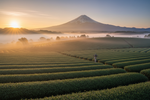
The Green Legacy of Japan: From Ancient Seeds to Matcha Mastery
, by Abe Massry, 1 min reading time
, by Abe Massry, 1 min reading time
From Buddhist monks carrying seeds across the sea to the meditative art of the tea ceremony, discover Japan's extraordinary green tea legacy and the secrets behind Matcha mastery.
Japan's relationship with tea is one of the most dedicated in the world. What began as seeds carried in the robes of traveling monks has evolved into a sophisticated culture centered on precision, health, and the vibrant beauty of green tea.
Tea first arrived in Japan from China during the early 9th century. It was brought by Buddhist monks, such as Saichō and Kūkai, who had traveled abroad to study. Later, in the 12th century, the monk Eisai further popularized the drink. He was so convinced of its benefits that he authored Kissa Yōjōki ("Drinking Tea for Health"), the first Japanese book specifically dedicated to the medicinal properties of the leaf.
Japan is famous for its unique cultivation methods, particularly "shading". For premium teas like Gyokuro and Matcha, the plants are covered to block sunlight weeks before harvest. This process:
Known as "The Way of Tea," the Japanese tea ceremony is a structured ritual of hospitality and mindfulness. It emphasizes "Ichigo Ichie," the idea that every meeting is a unique, transient moment to be savored. Using specialized tools like the Chasen (bamboo whisk) and Chawan (tea bowl), the practitioner prepares powdered Matcha into a frothy, energizing brew.